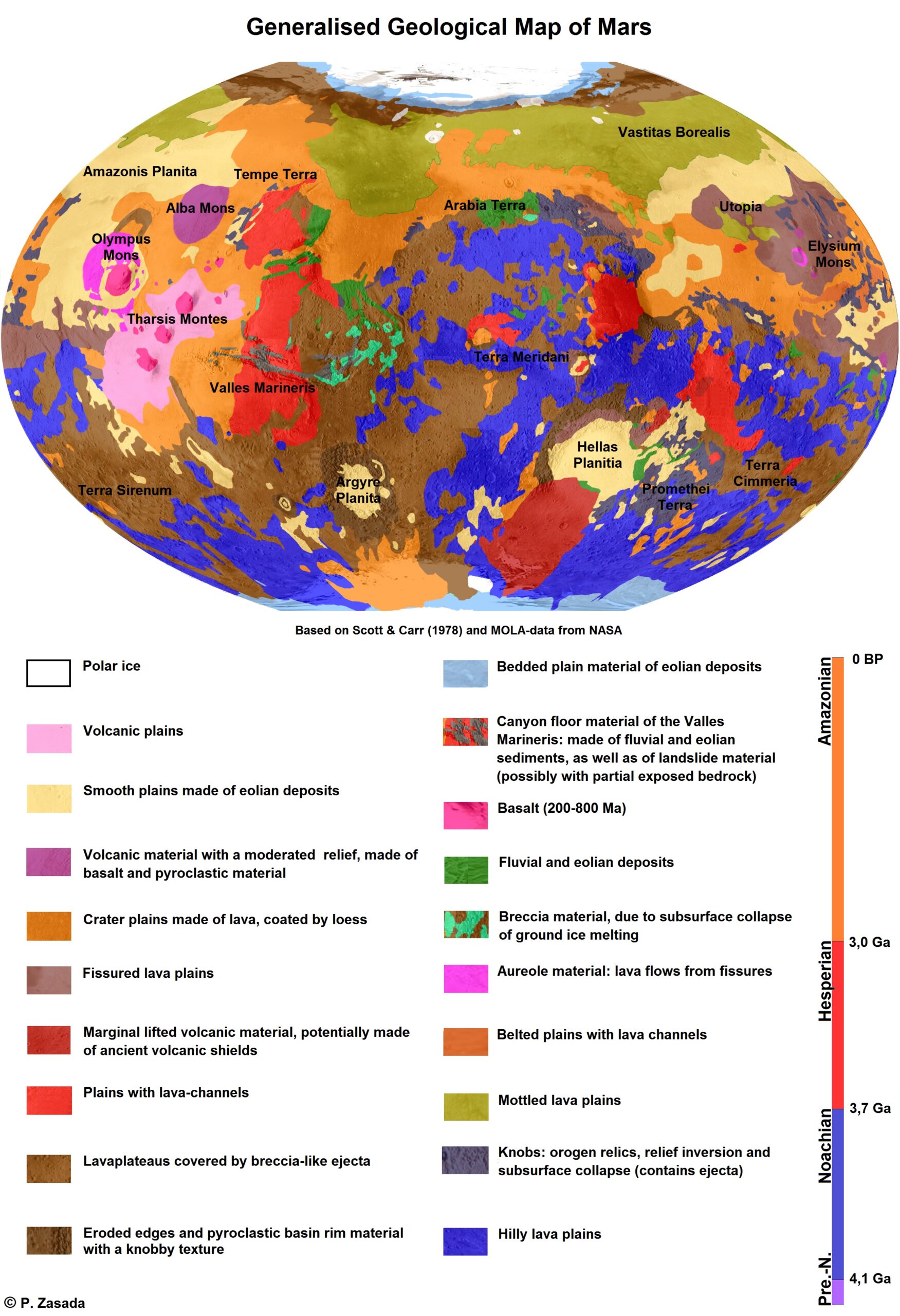
The geological map of Mars is set to be completed by China by the end of 2028. This ambitious project aims to enhance our understanding of the Martian landscape and geology.
Overview of China’s Mars Mapping Project
China’s ambitious Mars mapping project aims to produce a comprehensive geological map of Mars by the end of 2028. This initiative is part of China’s broader efforts in space exploration and aims to enhance our understanding of the Red Planet’s surface and geological history.
The project will utilize data gathered from various missions, including the Tianwen-1 orbiter, which has been actively studying Mars since its arrival in 2021. The orbiter is equipped with advanced imaging and scientific instruments, allowing scientists to analyze features such as:
- Surface composition: Identifying minerals and compounds present on Mars.
- Topography: Mapping the elevation and variations in terrain.
- Geological structures: Studying canyons, valleys, and potential past water flow.
Through this detailed geological map of Mars, researchers hope to uncover crucial insights into the planet’s formation, potential for past life, and its suitability for future human exploration. The mapping efforts will also contribute to international collaborations in planetary science, providing a valuable resource for scientists worldwide.
As the project progresses, it is expected to yield significant advancements in our knowledge of Mars, fostering further interest and investment in space exploration.
Importance of a Geological Map
The significance of a geological map of Mars cannot be overstated, as it serves as a crucial tool for scientists and researchers dedicated to understanding the Red Planet’s complex geology and history. With advancements in technology and ongoing exploration efforts, the creation of such maps provides invaluable insights into various Martian features and phenomena.
One of the primary reasons for the importance of a geological map is its role in identifying and analyzing the planet’s surface composition. By categorizing different rock types and geological formations, scientists can infer the processes that shaped Mars over billions of years. This understanding is vital for assessing the planet’s past climate and potential for hosting life.
Additionally, a detailed geological map is essential for future exploration missions. It aids mission planners in selecting optimal landing sites for rovers and landers, ensuring that the selected locations are scientifically valuable and safe for exploration. The map also facilitates the identification of resources that could support human missions, such as water ice and minerals.
Moreover, the geological map of Mars contributes to comparative planetology, allowing researchers to draw parallels between Martian geology and that of Earth and other celestial bodies. This comparative approach enriches our understanding of planetary formation and evolution across the solar system. In summary, the geological map of Mars is a foundational resource that enhances our knowledge of the planet and guides future exploration endeavors.
Technological Innovations in Space Exploration
Technological advancements in space exploration have significantly enhanced our understanding of the Martian landscape. The development of high-resolution imaging and mapping tools has been pivotal in creating a comprehensive geological map of Mars. Innovations such as advanced satellite technology and autonomous drones equipped with sophisticated sensors enable scientists to gather detailed data from the Martian surface.
One of the key innovations is the use of orbital satellites that capture images and data across various wavelengths. These satellites can analyze the composition of Martian rocks and soil, providing invaluable insights into the planet’s geological history. Some notable technologies include:
- High-Resolution Cameras: These cameras capture images with remarkable clarity, allowing for detailed geological analysis.
- Infrared Spectroscopy: This technique helps identify mineral composition by analyzing the infrared light reflected off the surface.
- Radar Imaging: Ground-penetrating radar can reveal subsurface structures, offering clues about Martian geology.
Moreover, the integration of artificial intelligence in data analysis accelerates the interpretation of vast amounts of information collected from Mars. As China aims to complete the geological map of Mars by the end of 2028, these technological innovations will play a crucial role in achieving this ambitious goal, ultimately enriching our understanding of the Red Planet.
Challenges in Mapping Mars
The journey to creating a comprehensive geological map of Mars is fraught with numerous challenges that scientists and researchers must overcome. One of the primary obstacles is the planet’s harsh environmental conditions, which can hinder data collection and analysis. The extreme temperatures and dust storms on Mars complicate the work of rovers and orbiters designed to gather geological data.
Moreover, the vast and varied terrain of Mars presents another significant challenge. The planet’s surface features, such as valleys, mountains, craters, and lava flows, require detailed examination to understand their formation and evolution. Mapping these features accurately is essential for producing a reliable geological map of Mars.
Additionally, the limited time and resources available for missions also pose difficulties. Space agencies like China’s are pushing to complete their geological mapping projects by ambitious deadlines, such as the end of 2028. This urgency often leads to compromises in data collection methods or the depth of analysis.
Finally, the complexity of interpreting data from Mars adds another layer of difficulty. Researchers must rely on sophisticated algorithms and models to analyze the geological data collected, ensuring that they can discern the true geological history of the planet.
Despite these challenges, the pursuit of a detailed geological map of Mars remains a crucial step in understanding the planet’s past and potential for future exploration.
Timeline for Completion
The timeline for the completion of the geological map of Mars has been set, with ambitious goals laid out by China’s space agencies. According to recent announcements, the project is expected to culminate by the end of 2028. This timeline is crucial as it aligns with various phases of ongoing Mars exploration efforts.
Several key milestones have been established to ensure the project remains on track:
- 2024: Initial data gathering and analysis will be completed, providing a foundational overview of Martian geology.
- 2026: Preliminary geological interpretations will be available, allowing researchers to understand the planet’s surface features better.
- 2027: Comprehensive data integration and validation will occur, ensuring accuracy in the geological assessments.
- 2028: The final geological map of Mars will be released, showcasing detailed insights into the planet’s composition and history.
Throughout this timeline, collaboration with international space agencies and research institutions is expected to enhance the depth and quality of the map. As scientists work toward this monumental goal, the implications of a complete geological map of Mars could significantly advance our understanding of the planet and its potential for future exploration.
Potential Discoveries from the Map
The geological map of Mars is expected to unveil a wealth of potential discoveries that could reshape our understanding of the planet. As scientists analyze this comprehensive map, several key areas of interest have emerged.
- Volcanic Activity: The geological map may reveal previously unknown volcanic structures, shedding light on Mars’ volcanic history and its similarities to Earth.
- Water History: Identifying ancient riverbeds and lake formations can provide insights into the planet’s watery past, which is crucial for understanding its potential to support life.
- Mineral Composition: The map will detail the distribution of various minerals across the Martian surface, helping scientists infer the planet’s geological processes.
- Impact Craters: A detailed analysis of impact craters can offer clues about the planet’s age and its environmental history.
Moreover, the geological map of Mars will support future exploration missions by identifying sites of interest for in-situ studies. These findings are vital for upcoming missions that aim to collect samples and analyze the planet’s geologic features directly.
As China aims to complete its geological mapping project by the end of 2028, the anticipation for new discoveries continues to grow. The insights gained from this map may not only enhance our understanding of Mars but also provide a deeper perspective on planetary evolution throughout the solar system.
Future of Mars Exploration
The future of Mars exploration is poised for transformative advancements, particularly with the ongoing efforts to create a detailed geological map of Mars. As nations collaborate and innovate, the implications for scientific understanding and exploration are profound.
China’s ambitious project to complete a geological map of Mars by the end of 2028 is just one example of the global commitment to unraveling the mysteries of the Red Planet. This map will not only enhance our knowledge of Martian geology but will also pave the way for future missions aimed at human exploration.
As various space agencies develop new technologies, the accuracy and detail of geological maps will improve dramatically. These advancements will assist in identifying potential landing sites for future missions, thereby reducing risks and costs associated with exploration.
Moreover, the geological map of Mars is expected to reveal vital information about the planet’s past, including signs of water and volcanic activity. Such discoveries could inform our understanding of Mars’ habitability and guide the search for extraterrestrial life.
In conclusion, the future of Mars exploration is bright, with the geological map serving as a crucial tool in unlocking the planet’s secrets. As we move closer to completing this ambitious project, the potential for groundbreaking discoveries continues to expand, influencing not only science but also our aspirations for more profound space endeavors.
By Patrick Zasada via Openverse
Read the original
Related reading
Strait of Hormuz tankers: Worst Navigation Dispute Explained · Fire TV Stick 4K: Is It the Best Streaming Device Yet? · Life Insurance Corporation news: What’s the Best Update?